National Institute of Information and Communications Technology (NICT)
Flies’ memories become disrupted when they lose only immediate synaptic potentiation

Memory may begin not only with changes that last a long time, but also with brief synaptic changes that occur immediately after an experience. On September 21, 2026, a research group at the National Institute of Information and Communications Technology (NICT) found striking memory abnormalities in fruit flies that had been made to lose only the immediate synaptic potentiation caused by Syt7. If the mechanism can be reproduced in humans and safely targeted, it could become possible to distinguish in the clinic between retaining an experience immediately after it occurs and consolidating it into long-term memory.
People can use what they have just seen or heard for a while. But it was not known how memories of “just now” arise inside nerve cells. When nerve cells continue to fire, the phenomenon in which signals at synapses—the points of contact between cells—become stronger has also remained unexplained at the molecular level, as has its role in memory.
Thinking about memory in separate parts
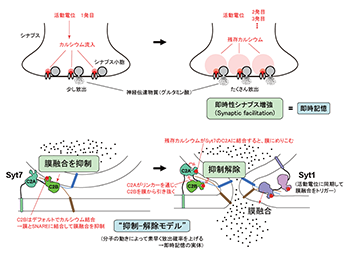
At synapses, substances called neurotransmitters are released to carry signals. If the amount released changes, the strength of the signal passed to the next nerve cell changes too. The phenomenon in which this release increases for only a short time is called “immediate synaptic potentiation.” It has been thought to be connected to “immediate memory,” the temporary retention of information just after an experience.
However, it is thought that keeping memories for a long time requires changes in synapses that last longer. So if memory is explained only through long-term changes, the cellular changes that happen just before them are missed. Fruit flies make it relatively easy to alter genes and separate out the functions of molecules, but a mechanism found in flies does not necessarily work in exactly the same way in the human brain.
Syt7 releases the brake on release
The NICT research group used synapses in fruit-fly embryos to genetically eliminate only immediate synaptic potentiation. The key is a protein called synaptotagmin 7 (Syt7). Syt7 senses the small amount of calcium left in nerve cells. This makes it easier for the neurotransmitters that carry the next signal to be released.
The mechanism was shown to involve the actions of two parts. The C2B domain normally suppresses release, but the C2A domain, after receiving the residual calcium, lifts that suppression. As a result, signals become stronger only at synapses that have been active repeatedly. The loss of Syt7 alone does not mean that the calcium sensor for this phenomenon has been identified, but the results open a way to manipulate the mechanism and separate its parts.
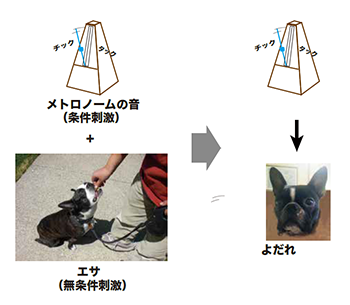
When the mutant flies were raised to adulthood and tested for conditioned responses, the researchers found striking memory abnormalities. Because flies that had lost only immediate synaptic potentiation showed disrupted memory, the research group says the results suggest that this phenomenon may be at least part of the brain’s physical basis for immediate memory. The cellular changes that occur just after a memory is formed have become a hypothesis that can be tested through genetic manipulation, rather than merely observed.
Separating the timing of memory in the clinic
If this mechanism is confirmed to work in the same way in the brains of mammals, it could become a molecular target for tracking the process by which neural activity immediately after an experience is transferred into long-term memory. In the future, psychiatric clinics might be able to examine separately whether a problem lies in retaining information immediately after an experience, attention, or consolidation into long-term memory, instead of grouping everything together as “poor memory.” This is what it could look like if Syt7’s role can be reproduced in humans and safely targeted.
However, this is not a shortcut to drugs that cure memory problems. Bipolar disorder has many contributing causes, and Syt7 alone cannot explain its symptoms or treatments. Turning this into a drug would require selecting a target, finding a way to deliver it to the brain, and testing for side effects. How the activity of postsynaptic cells—the cells receiving the signal—connects to the conversion into long-term memory is another question that must be solved next.